Comparing GPRS with circuit switched
In a GSM network the BSC governs the cell selection behavior
of the MS when in idle and active mode by different methods.
Idle mode MSs autonomously performs cell reselection by using
the C1/C2 criteria.
In active mode, non-GPRS MSs are steered by the locating functionality
implemented in the BSC. So this means that the BSC initiates
the handovers to other cells. With GPRS, the MS determines the
base station with which it will communicate, Figure 28 shows
the handover procedures for both Circuit Switched and Packet
Switched. The GPRS MS manages both the idle packet and transfer
packet mode behaviors.
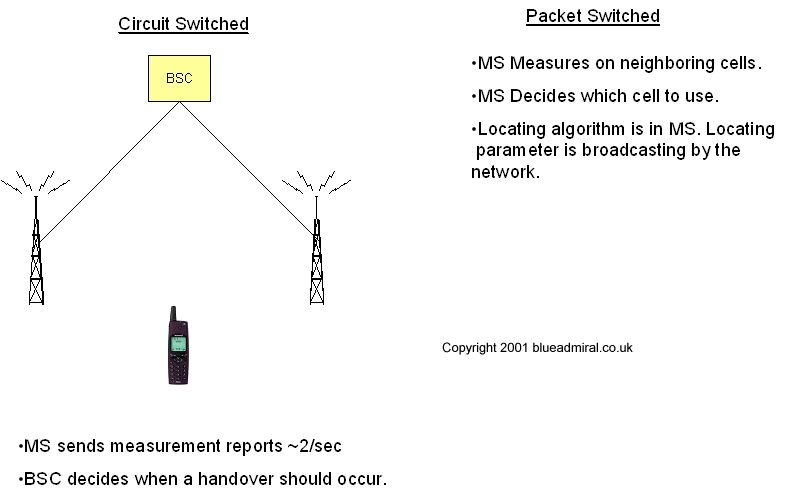
Figure 28 Handover, comparison between CS and PS
The cell selection and reselection
algorithm used for controlling the idle/transfer mode behaviors
are governed by the GPRS cell selection and reselection parameter
setting broadcast in the packet system information on the PBCCH
in each GPRS capable cell with an allocated PBCCH (MPDCH). If
no PBCCH has been allocated in a cell, the GPRS MS will read
the system information broadcast on BCCH and use the C1/C2 criteria
for cell selection and reselection as in the circuit switched
idle mode case.
So as you can see the GPRS cell selection and reselection algorithms
are governed by parameter settings. These parameters C31 and
C32 are different to the corresponding parameters for the circuit
switched system. However with some GPRS systems GPRS cell section
parameters are automatically mapped on those for cell selection/locating
known from the circuit switched case. The reason for this is
to achieve the same cell selection behavior for GPRS, as with
GSM, this will enable an easy rollout of GPRS in the network.
The GPRS standard allow the network to take over cell reselection
for a specific MS or for all MSs. This is called Network Controlled
Cell Reselection and have not yet been implemented in any UK
or European GPRS systems.