Protocols
Figure 7 shows the architecture of protocols used within the GSM system, with signaling protocols, interfaces as well as the entities already shown in Figure 5.
Again the main area of focus is
in the Um interface, this is because the other interfaces occur
between entities in a fixed network. The physical layer, Layer
1 handles all the radio specific functions. This layer includes
the creation of bursts according to the five different formats,
the multiplexing of bursts into TDMA frames, synchronisation with
the BTS, detection of the idle channels and the measurement of
the channel quality on the downlink. At Um, the physical layer
uses GSMK (Gaussian Shift Minimum Keying) for the digital modulation
and performs encryption/decryption of data This means that encryption
is not performed end-to-end, but only between MS and BTS over
the air interface.
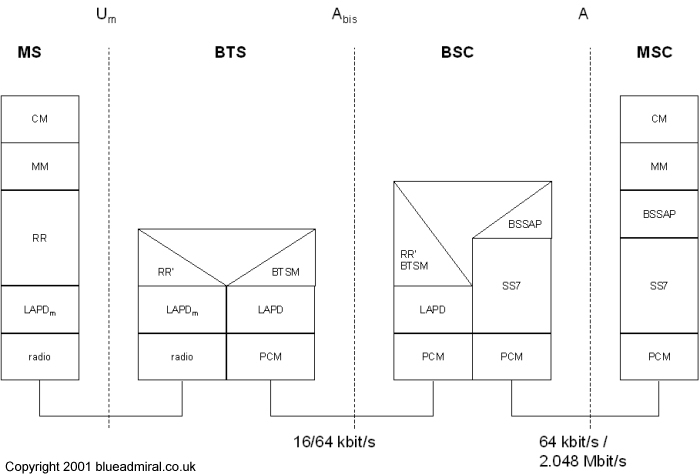
Figure 7 Protocol Architecture for signaling
The synchronisation also includes the correction of the individual path delay between the MS and the BTS, all MSs within a cell can use the same BTS and hence must be synchronised to the BTS. This is due to the fact that the BTS generated the time-structure of the frames and slots etc. This can be problematic since in this context there are different RTTs (Round Trip Time). An MS that is close to the BTS has a very short RTT whereas an MS that is 35 km away has a RTT of around 0.23 ms.. If the MS 35 km away used the slot structure without correction, a large guard spaces would be required as 0.23 ms. are already 40% of the 0.577 ms available for each time slot. (Wray Castle, GSM Appreciation, 1998.). Therefore the BTS sends the current RTT to MS, which then adjusts its access time so that all bursts reach the BTS within their limits. This mechanism ensures that the guard space is reduced to only 30.5 ms or 5%. See Figure 7. This means the adjustment of the access is controlled via the variable timing advance, where a burst can be shifted up to 63 bit times earlier, with the resulting bits having a duration of 3.69 ms, thus will result in the 0.23 ms needed.